


Dining Chairs
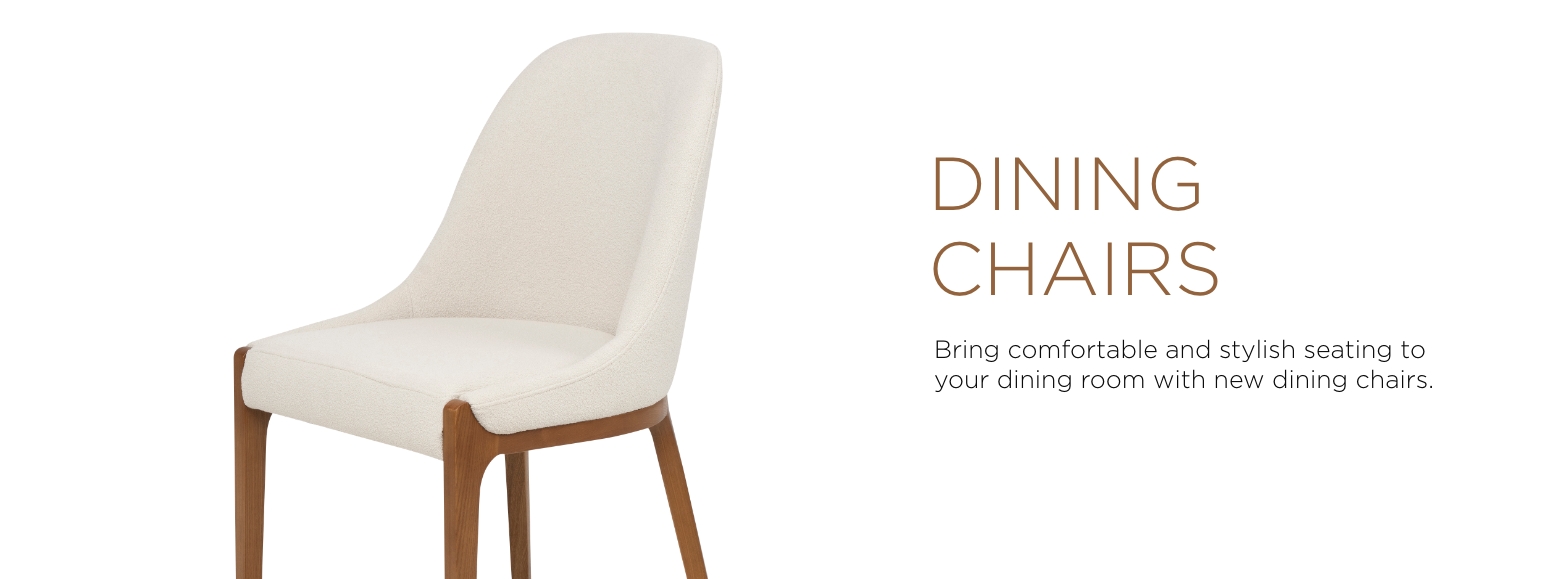

- First Look Pricing
- First Look Pricing
- First Look Pricing
- First Look Pricing
- First Look Pricing
- First Look Pricing
Dining Chairs
Dining chairs do more than provide seating—they help define your dining space and overall style. Here are some helpful answers to guide your selection.
Do all my dining chairs need to match?
Not at all. Mixing chair styles can add visual interest and depth to your dining space. For example, you might pair upholstered captain’s chairs at the ends of the table with more streamlined designs along the sides.
To keep the look cohesive, try to maintain consistency in finishes, scale, or color tones so the overall design feels intentional rather than mismatched.
How can I create a more elevated dining look with chairs?
Look for chairs that bring in texture or unique shapes, such as curved backs, rich fabrics, or subtle tufting. Upholstered chairs in neutral tones can add a refined feel, while sculptural wood or leather options introduce warmth and contrast.
Small design details can make a big impact, helping your dining area feel more polished and thoughtfully styled.
What’s the best way to style dining chairs in an open concept space?
In open concept layouts, it’s helpful to create a sense of flow between spaces. Choose dining chairs that echo elements from nearby areas, such as similar colors, materials, or leg styles.
This approach helps tie the rooms together visually while still allowing each space to have its own identity.
Can I mix materials between my table and chairs?
Yes, mixing materials is a great way to create a layered and curated look. For instance, wood chairs can pair beautifully with a glass or stone table, while leather chairs can complement a warm wood finish.
The key is to ensure the combination feels balanced and intentional, rather than random.
How much space should I leave between chairs for comfort?
Aim to leave about 6 inches of space between dining chairs so guests have enough elbow room. If your space is more compact, consider chairs with slimmer profiles to maximize seating while still maintaining comfort and style.